Showing posts with label reviews. Show all posts

Blog Tour Review: Wicked Saints by Emily A. Duncan

Thursday, April 4, 2019


Today is my stop on the Wicked Saints blog tour!


Title: Wicked Saints
Author: Emily A. Duncan
Genre: fantasy
Series: Something Dark and Holy #1
Pages: 385
Published: April 2 2019
Source: publishers for review
Rating: 4.5/5


A girl who can speak to gods must save her people without destroying herself.

A prince in danger must decide who to trust.

A boy with a monstrous secret waits in the wings.

Together, they must assassinate the king and stop the war.

In a centuries-long war where beauty and brutality meet, their three paths entwine in a shadowy world of spilled blood and mysterious saints, where a forbidden romance threatens to tip the scales between dark and light. Wicked Saints is the thrilling start to Emily A. Duncan’s devastatingly Gothic Something Dark and Holy trilogy.


Without doubt, Wicked Saints marks the arrival of a new talent on the fantasy scene. With her debut and the launch of a series, Emily A. Duncan ably crafts a tactile and immersive world, full of monsters and magic, gods and girls. From atmosphere to characterization, Wicked Saints is a finely-tuned work of fantasy/horror. The author clearly illustrates a keen eye for detail and a dab hand at plotting; this novel proves a good harbinger of things to come for fans of intricate, morally grey stories.

The slowly revealed world and central conflict at the root of Nadya's story is loosely based on the Hundred Years' War and is also vaguely Slavic in nature and tone. Despite these real-world influences, Duncan's countries of Kalyazin and Tranavia come across with a unique sense of place and history; their ongoing and escalating conflict is rooted in recognizable territory and feels as senseless as any real war. There's a solidity to the world that Duncan has fashioned for her characters to live within and it anchors not only Nadya but Serefin and Malachiasz as well. The verisimilitude of each of these countries is slowly built, by Nadya's stories and experiences and by Serefin's journey across both in pursuit of her. It's a world worth exploring and bursting with potential.

The characters in Wicked Saints live up to the high expectations wrought by comparisons to Bardugo. Duncan's characters are complicated and conflicted -- they may not always be likeable but they are always interesting and hard to predict. Nadya, Serefin, and Malachiasz are more than they appear to be and are more connected than it might seem. Their slowly revealed relationships make for another layer to the interactions between them.  This author has shown herself to be quite adept at uncovering and exploring the hidden facets of people.Even the secondary characters feel three-dimensional and real, though I could have done with more time spent with Parji in particular.

Wicked Saints stands out. It's unapologetic and angry; Nadya's emotions bleed out from the page and so does Serefin's. It leaves a mark when you're finished because it's memorable and harsh. A dark fantasy filled with blood magic, power, and an endless struggle. The magic systems could stand to be fleshed out some more but signs indicate that more on the front will be present in the sequels. Emily A. Duncan knows to leave her audience hungry for more and this brutal, reckless read does exactly that.


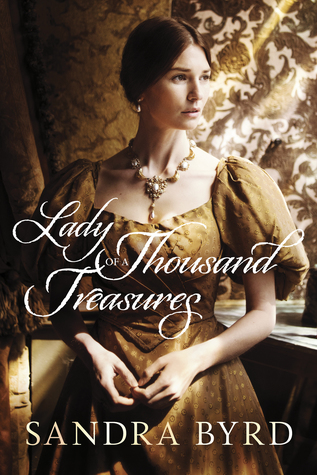
Book Tour Review: Lady of a Thousand Treasures by Sandra Byrd

Wednesday, October 17, 2018
Title: Lady of a Thousand Treasures
Author: Sandra Byrd
Genre: historical fiction
Series: Victorian Ladies #1
Pages: 480
Published: October 9 2018
Source: Historical Fiction Virtual Book Tours for review
Rating: 3.5/5

Miss Eleanor Sheffield is a talented evaluator of antiquities, trained to know the difference between a genuine artifact and a fraud. But with her father’s passing and her uncle’s decline into dementia, the family business is at risk. In the Victorian era, unmarried Eleanor cannot run Sheffield Brothers alone.

The death of a longtime client, Baron Lydney, offers an unexpected complication when Eleanor is appointed the temporary trustee of the baron’s legendary collection. She must choose whether to donate the priceless treasures to a museum or allow them to pass to the baron’s only living son, Harry—the man who broke Eleanor’s heart.

Eleanor distrusts the baron’s motives and her own ability to be unbiased regarding Harry’s future. Harry claims to still love her and Eleanor yearns to believe him, but his mysterious comments and actions fuel her doubts. When she learns an Italian beauty accompanied him on his return to England, her lingering hope for a future with Harry dims.

With the threat of debtor’s prison closing in, Eleanor knows that donating the baron’s collection would win her favor among potential clients, saving Sheffield Brothers. But the more time she spends with Harry, the more her faith in him grows. Might Harry be worthy of his inheritance, and her heart, after all? As pressures mount and time runs out, Eleanor must decide whom she can trust—who in her life is false or true, brass or gold—and what is meant to be treasured.


With her keen eye for time, detail, and scenery and a talent for crafting realistic and likeable characters, reading a Sandra Byrd book has yet to disappoint me. Her historical novels are well-drawn forays into the past, using the lives of disparate people during interesting times. Her latest, Lady of a Thousand Treasures, is a slowly spooled-out historical mystery; one that also has a strong romantic plotline to complement the meticulously built series of questions that surround middle-class Miss Eleanor Sheffield and her work in antiquities.

Eleanor is a deceptively mild, self-effacing woman; outwardly demure but possessing a keen mind, self-confidence, and abundant personal drive. She's relatable without being anachronistic for the time within which she lives. Her need to protect her family is pivotal but it's also refreshing that she likes her job, she likes to work and use her brain to provide. Always, she takes time to consider, think, and decide before taking action-- a benefit to her profession but one that leads to romantic complications when her longtime love acts rashly. The circumstances that keep Harry and Eleanor apart can feel a bit contrived -- one real, substantial conversation could have cleared things up -- but the author makes their interactions shine. There's chemistry and an easy camaraderie between them. His charm and her carefulness work well together.

The story in Lady of a Thousand Treasures is an involved one, tying together antiquities theft, murder, the Italian Wars for unity, a vengeful father, debtors' prisons, and a thwarted engagement. There's a lot of plot fodder and for the most part, the story covers it all and then moves along well and quickly. Eleanor is sorely tested from a wide array of antagonistic forces but she's stalwart and resourceful from start to finish.

There is also a slight religious element to the story in Lady of a Thousand Treasures. I rarely reach for anything in that realm of fiction but with Sandra Byrd, the more religious moments aren't heavy-handed and nor do they detract from the real plot being set up. They are incidental to what is happening; faith is part of Eleanor's life but the book isn't preachy. It can be bypassed or have  the reader's attention; it is not necessary. The real focus of the novel is Eleanor and her internal decisions -- first about the collection and then about how to save Sheffield Brothers.

First in a new series, Lady of a Thousand Treasures is an auspicious beginning.


Review: The Clockmaker's Daughter by Kate Morton

Sunday, August 19, 2018
Title: The Clockmaker's Daughter
Author: Kate Morton
Genre: historical
Series: N/A
Pages: 608
Published: expected September 2018
Source: publishers via NetGalley
Rating: 4.25/5

My real name, no one remembers.
The truth about that summer, no one else knows.


In the summer of 1862, a group of young artists led by the passionate and talented Edward Radcliffe descends upon Birchwood Manor on the banks of the Upper Thames. Their plan: to spend a secluded summer month in a haze of inspiration and creativity. But by the time their stay is over, one woman has been shot dead while another has disappeared; a priceless heirloom is missing; and Edward Radcliffe's life is in ruins.

Over one hundred and fifty years later, Elodie Winslow, a young archivist in London, uncovers a leather satchel containing two seemingly unrelated items: a sepia photograph of an arresting-looking woman in Victorian clothing, and an artist's sketchbook containing the drawing of a twin-gabled house on the bend of a river.

Why does Birchwood Manor feel so familiar to Elodie? And who is the beautiful woman in the photograph? Will she ever give up her secrets?

Told by multiple voices across time, The Clockmaker's Daughter is a story of murder, mystery and thievery, of art, love and loss. And flowing through its pages like a river, is the voice of a woman who stands outside time, whose name has been forgotten by history, but who has watched it all unfold: Birdie Bell, the clockmaker's daughter.


Kate Morton has long been a favorite, even amongst my top authors. As I have said before, her novels are masterpieces of narrative fiction.  They are intricate and executed with aplomb. I know an author is highly-prized to me when my reaction to their work is anything less than five-stars because it feels like both a surprise and just intrinsically wrong, somehow. But I have to admit that while The Clockmaker's Daughter contains nearly all the classic Morton hallmarks of a great read, this particular set of interwoven stories didn't resonate with me as much as almost all of her previous novels did. I still fell into her intricate style of storytelling eventually, but it wasn't as complete of an immersion; for once, this is a Morton that could stand to use a bit of editing down. In a six hundred page book, especially one so dependent on the slow reveal of authorial sleight of hand, the underdeveloped aspects of the story stand out in retrospect.

The tale of Birdie and Leonard and Elodie and Tip and all the others connected to the manor at Birchwood is by no means a "bad" book -- Morton isn't even capable of that with her weakest effort to date, 2015's The Lake House -- but the beginning of this lags, one of the POVs is rather dull and underdeveloped each time it's visited, and the addition of the supernatural elements detracted from the novel's other various strongpoints. Dense and slow-moving as is the author's usual style, the plot to The Clockmaker's Daughter takes a long time to engage the reader and even Kate's undeniable and present talents for atmosphere and mystery can't entirely compensate for it.

The cast is a myriad of characters with tangential connections to one another across time and distance. Their slowly revealed relationships make the pages spent interesting for the most part; Morton's quite adept at uncovering the hidden facets of people, this time those related to the mysterious photograph whose discovery incited all the ensuing revelations. Leonard is the exception to the rule; his chapters have emotional resonance but his voice is dull and the events he narrated aren't the most pivotal. Despite his relevance to both plot and other characters, he is a charisma void on the page. The supernatural additions of <spoiler>the 'Night of the Following' (maybe??) and even Birdie herself, charming as she was</spoiler> didn't work and also felt unnecessary. One could have been excised completely and the other could have featured in a more mundane sense. They felt like a rare misfire from an experienced author.

The Clockmaker's Daughter is the author's sixth to be so centered on dual timelines across history and connected to a mysterious house/manor/castle and each is unique gothic tale of secrets, family, and how the past lives on in the present.Though not the complete Morton experience possible and not without a few missteps in its hundreds of pages and several rotating POVs, The Clockmaker's Daughter is still a solidly good novel and with well-rendered characters, an enveloping atmosphere, a intriguing set of mysteries, and creative plotting tying it all together. It's a decent idea of what this author is capable of doing even if it left me craving a reread for the more polished The Distant Hours and The House at Riverton.


Review: The Storyteller's Secret by Sejal Badani

Thursday, August 16, 2018
Title: The Storyteller's Secret
Author: Sejal Badani
Genre: historical fiction
Series: N/A
Pages: 411
Published: expected September 2018
Source: ARC received for review
Rating: 3.5/5

From the bestselling author of Trail of Broken Wings comes an epic story of the unrelenting force of love, the power of healing, and the invincible desire to dream.
 
Nothing prepares Jaya, a New York journalist, for the heartbreak of her third miscarriage and the slow unraveling of her marriage in its wake. Desperate to assuage her deep anguish, she decides to go to India to uncover answers to her family’s past.

Intoxicated by the sights, smells, and sounds she experiences, Jaya becomes an eager student of the culture. But it is Ravi—her grandmother’s former servant and trusted confidant—who reveals the resilience, struggles, secret love, and tragic fall of Jaya’s pioneering grandmother during the British occupation. Through her courageous grandmother’s arrestingly romantic and heart-wrenching story, Jaya discovers the legacy bequeathed to her and a strength that, until now, she never knew was possible.


A finely-tuned dual timeline novel centered on memorable women, both modernish America and India in the 1930s - 1940s. A rather dense book and one that can move the plot rather slowly, The Storyteller's Secret is very much character-driven in both its past and the present timelines. The two seemingly-disparate plots are intricately linked to one another, and though the reveal of how that is so is easily guessed, Badani's talent for characterization compensates for any lost surprise later on. She is able to evince genuine interest in the people involved, from Jaya and her "modern" problems, to Amisha's quiet determination in the rigid culture of the past, and that makes reading this historical fiction a satisfying experience.

The characters and world of her novels are where this author truly shines. Some of the novel's plotting is a bit blunt and predictable for anyone paying attention, but her characters are well-wrought and realistic and her settings are vibrantly realized. It's easy to envision both sets of plotlines but especially so when set in the lively, colorfully described India of Badani's pen. Likewise, the American Jaya is a character easy to understand and care for but it is Amisha that truly captures the heart of the novel. She lives a far different life than her modern counterpart but it's easy to see the echoes of one another across the decades that divide them.

There is perhaps just a shade too much perspective changing in The Storyteller's Secret. Each plotline has its merits and its problems, but jumping between first-person to third, so rapidly can highlight the artificiality of fiction. That, combined with the easily-predicted reveal, detract slightly from the story's conclusion. The Storyteller's Secret is a comprehensive, detailed novel, that does a lot right when it comes to character and setting. But though the good points outnumber the negative by a fair margin, it must be noted that overall, it was weighed down by a few too many chapters and a rather overt plot resolution.


Blog Tour Review: Star-Touched Stories by Roshani Chokshi

Monday, August 13, 2018
Title: Star-Touched Stories
Author: Roshani Chokshi
Genre: fantasy
Series: The Star-Touched Queen #2.5
Pages: 304
Published: August 7 2018
Source: ARC via publishers for review
Rating: 4/5

Three lush and adventurous stories in the Star-Touched world.

Death and Night

He was Lord of Death, cursed never to love. She was Night incarnate, destined to stay alone. After a chance meeting, they wonder if, perhaps, they could be meant for more. But danger crouches in their paths, and the choices they make will set them on a journey that will span lifetimes.

Poison and Gold

Now that her wish for a choice has come true, Aasha struggles to control her powers. But when an opportunity to help Queen Gauri and King Vikram's new reign presents itself, she is thrown into the path of the fearsome yet enchanting Spy Mistress. To help her friends, Aasha will have to battle her insecurities and perhaps, along the way, find love.

Rose and Sword

There is a tale whispered in the dark of the Empire of Bharat-Jain. A tale of a bride who loses her bridegroom on the eve of her wedding. But is it a tale or a truth?
 

These three short stories, set in the same magical and dangerous world as the author's full-length novels The Star-Touched Queen and its successor A Court of Wishes, are another window into the fertile imagination of Roshani Chokshi. Each is replete with the vibrant imagery and vivid writing that readers have come to appreciate in Chokshi’s verbose style. The writing itself can approach purple prose at times, but without ever crossing over; this is a flowery book full of ornate writing and Chokshi has the talent to pull it off with aplomb.

Though all the additions to Star-Touched Stories are creative, well-written and plotted, it is the first,‘Death and Night’, that is the best, and the sole one rated at a full five stars. All three make for a solid selection but Chokshi's clever, and often darkly humorous or just plain silly, look at the courtship between the god of death and goddess of night is the standout. A familiar story, and a prequel for the first novel, played out in fresh hands and with fresh eyes, there's inventiveness from start to finish as Chokshi weaves her unlikely but impossible to resist love story. It doesn't follow the expected path or fall into overdone tropes; watching Amar and Maya is still genuinely fun and seeing them meet is satisfying.

The second, 'Poison and Gold', is another strong offering; one a bit shorter but focused on flawed and yet likeable characters, relatable despite their less-than-mundane situations and abilities. The writing itself remains a standout throughout the pages, but Aasha's struggle to control her gift, control her fate is vividly rendered and easily empathized. 'Rose and Sword' is a another good short story, but even with the talents of varied Roshani Chokshi, felt a bit shortchanged in comparison to the sweeping romance of the first and the heartfelt emotion of the second. It was too short, too rushed of an ending. The unexpected glimmers of humor, usually unexpected, were another highlight of the entire collection.

An anthology that further explores the world that Maya introduced us to and Gauri further expanded on her own adventures, Star-Touched Stories is a glimpse at smaller lives within a large world. Key figures are shown and feature into the plots, but even the newcomers and side characters make an impression. The author's vivid storytelling, which is often so descriptive it verges on tangible, is ably suited to short-form as well as full-length novels. It was fun to revisit such a fantastical and unique world, even for a short time.


Book Tour Review: The Romanov Empress by C.W. Gortner

Monday, July 30, 2018


Title: The Romanov Empress
Author: C.W. Gortner
Genre: historical fiction
Series: N/A
Pages: 448
Published: July 2018
Source: Historical Fiction Virtual Book Tours for review
Rating:  4/5

Even from behind the throne, a woman can rule.

Narrated by the mother of Russia's last tsar, this vivid, historically authentic novel brings to life the courageous story of Maria Feodorovna, one of Imperial Russia's most compelling women who witnessed the splendor and tragic downfall of the Romanovs as she fought to save her dynasty in the final years of its long reign.

Barely nineteen, Minnie knows that her station in life as a Danish princess is to leave her family and enter into a royal marriage--as her older sister Alix has done, moving to England to wed Queen Victoria's eldest son. The winds of fortune bring Minnie to Russia, where she marries the Romanov heir and becomes empress once he ascends the throne. When resistance to his reign strikes at the heart of her family and the tsar sets out to crush all who oppose him, Minnie--now called Maria--must tread a perilous path of compromise in a country she has come to love.

Her husband's death leaves their son Nicholas as the inexperienced ruler of a deeply divided and crumbling empire. Determined to guide him to reforms that will bring Russia into the modern age, Maria faces implacable opposition from Nicholas's strong-willed wife, Alexandra, whose fervor has lead her into a disturbing relationship with a mystic named Rasputin. As the unstoppable wave of revolution rises anew to engulf Russia, Maria will face her most dangerous challenge and her greatest heartache.

From the opulent palaces of St. Petersburg and the intrigue-laced salons of the aristocracy to the World War I battlefields and the bloodied countryside occupied by the Bolsheviks, C. W. Gortner sweeps us into the anarchic fall of an empire and the complex, bold heart of the woman who tried to save it.


Covering decades in the doomed Romanov Court, veteran author C.W. Gortner uses his many strengths as a historical fiction writer to illuminate the life of Dagmar of Denmark, who became known to history by her adopted name of Empress Maria Feodorovna. Mother to the last Tsar of Russia, this kind and clever woman left an impact all her own both on her family and on the country she adopted as her own.

Dagmar, who usually answered to the name Minnie though she had a plethora of nicknames, led a fascinating life. The second daughter of an impoverished and unexpected king of Denmark, her story is full of both heartbreak and quiet determination. Fiancee first to Tsarevich Nicholas Alexandrovich, but the eventual wife of his brother Emperor Alexander III, her romantic life was unpredictable and tangled. Her many allegiances -- to her beloved home country, then to Nixa, then her autocratic husband, and finally to her children and grandchildren -- made the intersections of her identity relatable and recognizable to modern readers. She was a woman pulled in many directions who did the best she could for her country and for her descendants.

Life in the Romanov court is brought to vibrant reality under Gortner's pen, albeit with a few improvisations on the factual. Minnie's introduction to Russian culture and perspective is fresh and atmospheric; seeing Russia through the eyes of the tsars and their family is memorable. Some details and events have been adjusted, moved, or ignored to streamline the narrative and the authorial decisions make sense; Minnie's life was long and convoluted but the gist of her story is contained within The Romanov Empress. She's presented as a whole person; fallible and flawed, but one who no doubt tried to stave off the inevitable decline of her 400-year-old dynasty.

Large in scope but without sacrificing the finer details, The Romanov Empress paints a realistic and researched version of Dagmar. Her personality and opinions shine through, even when overruled by her more despotic spouse; a figure in the Russian court for most of her life, it's easy to get lost in the romanticized version of this period in history. But Maria was a real woman, who loved, lost and then tried to find her grand-daughter after the worst horror befell her extended family. Through all the stages of her public life -- impoverished princess to wary tsarevna to strong-willed tsarina -- Minnie never lost her quiet strength or her deeply-held beliefs. She was an impressive woman and Gortner shows her in all her imperfect humanity.


Review: Hullmetal Girls

Tuesday, July 3, 2018
Title: Hullmetal Girls
Author: Emily Skrutskie
Genre: science fiction
Series: N/A
Pages: 320
Published: 2018
Source: publishers via NetGalley
Rating: 2.5/5

Aisha Un-Haad would do anything for her family. When her brother contracts a plague, she knows her janitor's salary isn't enough to fund his treatment. So she volunteers to become a Scela, a mechanically enhanced soldier sworn to protect and serve the governing body of the Fleet, the collective of starships they call home. If Aisha can survive the harrowing modifications and earn an elite place in the Scela ranks, she may be able to save her brother.

Key Tanaka awakens in a Scela body with only hazy memories of her life before. She knows she's from the privileged end of the Fleet, but she has no recollection of why she chose to give up a life of luxury to become a hulking cyborg soldier. If she can make it through the training, she might have a shot at recovering her missing past.

In a unit of new recruits vying for top placement, Aisha's and Key's paths collide, and the two must learn to work together--a tall order for girls from opposite ends of the Fleet. But a rebellion is stirring, pitting those who yearn for independence from the Fleet against a government struggling to maintain unity.

With violence brewing and dark secrets surfacing, Aisha and Key find themselves questioning their loyalties. They will have to put aside their differences, though, if they want to keep humanity from tearing itself apart.

While I remain a big fan of this author and her apparently boundless and horrific imagination (that's a compliment, trust me) I found Hullmetal Girls to be maybe 2.5 stars out of 5 if I am being lenient. Maybe. I have to admit that I am disappointed by the lackluster effort that is her third novel. I expect big things from the mind behind The Abyss Surrounds Us and while this book has more than a few good ideas and a few clever science fiction angles, the messy execution of them makes it hard to stick around, much less immerse myself in Key and Aisha's POVs. 

This is a standalone so I understand the author didn't have the time of say her earlier duology to frame and fill her imagined world/starships, but there are many questions left about how the districts work; some subplots are woven into the gaps of the information but overall it's a patchy framework from which to hang a story. The setup of this space-dystopia is also unfailingly familiar to anyone whose read even just the Hunger Games. Skrutskie is usually brimming with originality and flair -- and while the second talent is on display with things like the Scela system, the "rich and poor numbered district' left much to be desired.

The worldbuilding is sink or swim when it comes to the hard scifi (and then comes the body horror, be prepared), but without enough information provided and the POVs felt indistinguishable. There is a definite uptick after about 65% in -- the story makes up somewhat for lost time by the end but it's not enough to entirely compensate. It takes a long time for basic details of Key and Aisha's life to be understood -- how the Scela work, what their function is within the ships, what the General Body means and how it ties into the story. It's clumsily rendered and often too late; I finished the novel because I was intrigued in one of the plots, but not due to any attachment to the characters themselves.

A swing and a miss for Skrutskie's third at bat, but I'll definitely be checking out her fourth.


Two Minute Review: The Kiss Quotient by Helen Hoang

Friday, June 8, 2018
Title: The Kiss Quotient
Author: Helen Hoang
Genre: romance
Series: N/A
Pages: 336
Published: June 5 2018
Source: publishers via NetGalley
Rating: 5/5

A heartwarming and refreshing debut novel that proves one thing: there's not enough data in the world to predict what will make your heart tick.

Stella Lane thinks math is the only thing that unites the universe. She comes up with algorithms to predict customer purchases--a job that has given her more money than she knows what to do with, and way less experience in the dating department than the average thirty-year-old.

It doesn't help that Stella has Asperger's and French kissing reminds her of a shark getting its teeth cleaned by pilot fish. Her conclusion: she needs lots of practice--with a professional. Which is why she hires escort Michael Phan. The Vietnamese and Swedish stunner can't afford to turn down Stella's offer, and agrees to help her check off all the boxes on her lesson plan--from foreplay to more-than-missionary position...

Before long, Stella not only learns to appreciate his kisses, but to crave all the other things he's making her feel. Soon, their no-nonsense partnership starts making a strange kind of sense. And the pattern that emerges will convince Stella that love is the best kind of logic...

Wow -- a strong debut and a thoroughly wonderful surprise. This was just absolutely fun and one I didn't want to end though I gobbled it up in two great marathons of utter concentration. Nothing could divert me from Stella and Michael's slow-but-also-not courtship. From the start, it's authentic and engaging and focused on several often ignored perspectives with both sensitivity and care.  

The Kiss Quotient is romance done really well -- it's warm, funny, and the plot is driven by more than just superficial conflict. It's an impressive effort for a debut because the story hardly misses a step. The author may be new but she knows her way around a trope; how to use them, invert them (reverse Pretty Woman!) and how to create sexual tension.

The Kiss Quotient makes for a memorable and heartwarming read; one full of well-drawn characters in an engaging love story that brings the feels and the shipping. A promising debut and easily a full five-star read. It's just plain fun to read. This is one that will be visited again in the near future when I need a guaranteed winner.


Two Minute Review: Only Human by Sylvain Neuvel

Thursday, May 3, 2018
Title: Only Human
Author: Sylvain Neuvel
Genre: science fiction
Series: Themis Files #3
Pages: 352
Published: May 2018
Source: publishers via NetGalley
Rating: 3/5

We always thought the biggest threat to humanity would come from the outside.

We were wrong.

As the human race picks up the pieces of destruction left behind, a new world order emerges. New alliances are formed. Old divisions are strengthened. And, with a power struggle fuelled by the threat of mutually assured destruction, nothing is certain.

At a time when the world's nations should have been coming together, they have never been more divided.

With the human race teetering on the brink of total war, Rose, Vincent and Eva must choose sides. But doing the right thing might mean making the ultimate sacrifice.


Hmmm... I hate to damn with fain praise but this is a very lukewarm three stars. This is one novel that needed to sit and sink in before I was entirely sure how I felt about it. It's obvious that Sylvain Neuvel never does what you think he is going to -- or even what he might possibly do. He heads in entirely new directions with each successive novel, but I can't say that it worked very well for me in this last of his humans-meet-aliens trilogy. The first novel was an unparalleled success but neither of the followups matched that original level of imagination meets execution.

For a finale, specially for a series like this -- one that has been so creative and unpredictable... this was kind of underwhelming, I am not going to lie. This series started out so strongly and then.. kinda petered out more and more with both sequels. They each weren't bad taken on their own merit, but both Waking Gods a year ago and Only Human now definitely didn't have the vision and creativity of Sleeping Giants.


Book Tour Review: Ecstasy by Mary Sharratt

Friday, April 27, 2018
Title: Ecstasy
Author: Mary Sharratt
Genre: historical fiction
Series: N/A
Pages: 400
Published: April 10 2018
Source: Historical Fiction Virtual Book Tours for review
Rating:  4/5

In the glittering hotbed of turn-of-the-twentieth-century Vienna, one woman’s life would define and defy an era

Gustav Klimt gave Alma her first kiss. Gustav Mahler fell in love with her at first sight and proposed only a few weeks later. Bauhaus founder Walter Gropius abandoned all reason to pursue her. Poet and novelist Franz Werfel described her as “one of the very few magical women that exist.” But who was this woman who brought these most eminent of men to their knees? In Ecstasy, Mary Sharratt finally gives one of the most controversial and complex women of her time the center stage.

Coming of age in the midst of a creative and cultural whirlwind, young, beautiful Alma Schindler yearns to make her mark as a composer. A brand-new era of possibility for women is dawning and she is determined to make the most of it. But Alma loses her heart to the great composer Gustav Mahler, nearly twenty years her senior. He demands that she give up her music as a condition for their marriage. Torn by her love and in awe of his genius, how will she remain true to herself and her artistic passion?

Part cautionary tale, part triumph of the feminist spirit, Ecstasy reveals the true Alma Mahler: composer, author, daughter, sister, mother, wife, lover, and muse.


Mary Sharratt is a vivid writer with an eye for both detail and atmosphere and a knack for re-framing familiar historical events in new light. She highlights and humanizes women from history; those who are often ignored, stifled, or vilified and those that are rarely given a voice in the official narrative. With Ecstasy, Sharratt illuminates the life of the talented and tempestuous Alma Schindler, a formidable musician in her own right as well as a muse and inspiration to many well-known male musicians and artists in turn-of-the-century Vienna.

A strong personality with a noticeable talent for both composing and performing, Alma's presence is unique and memorable. She's faced by constraints of her time and society, as well as in her eventual husband's expectations but her talent and wit shine through. And even through facing her personal demons, Alma remains uniquely herself. Her point-of-view is refreshingly relate-able without being anachronistic for the times in which she lived. Sharratt does an admirable job of adapting Alma's voice and feelings and her narration feels natural.

Creation, especially of the musical variety, are main themes for both Ecstasy and for Alma herself in all stages of her story. Her life revolved around art for its entirety with a famous painter for a father and Sharratt makes music omnipresent here in her fictional life. Alma's need to create more than just human life, to be defined as more than only a wife or a mother -- to make her own art known -- is a core element to who she is and how she develops as a single woman and later as the 'proper' wife to an Opera Director. Her life and goals may shift and ebb, but her love of music is a constant, believable, and unchanging facet of her characterization.

An authentic and vivid recreation of a fascinating and flawed woman, Ecstasy is a look at mental health and love, music and motherhood. Mary Sharratt ably renders a nuanced version of a complicated woman and adapts her unconventional life with ease. Her version of the acclaimed and beloved fixture of culture and society in Europe and in America is engaging, forthright, and unique.  Ecstasy is a window to a vibrant Viennese society and a memorable main character.


Blog Tour Schedule

Tuesday, April 10
Review at Broken Teepee

Wednesday, April 11
Feature at Passages to the Past

Thursday, April 12
Review at Bookfever
Review at Unabridged Chick

Friday, April 13
Interview at Unabridged Chick
Review at View From the Birdhouse

Saturday, April 14
Review at Clarissa Reads it All

Monday, April 16
Review at Cup of Sensibility

Tuesday, April 17
Review at Based on a True Story

Wednesday, April 18
Review at Oh, for the Hook of a Book!

Thursday, April 19
Review at History From a Woman’s Perspective

Friday, April 20
Review at Linda’s Book Obsession

Sunday, April 22
Review at Carole Rae’s Random Ramblings

Monday, April 23
Review at A Bookaholic Swede

Tuesday, April 24
Interview at Oh, for the Hook of a Book!

Wednesday, April 25
Review at A Literary Vacation

Thursday, April 26
Guest Post at A Bookish Affair

Friday, April 27
Review at Ageless Pages Reviews

Monday, April 30
Review at Caryn, the Book Whisperer

Tuesday, May 1
Review at A Bookish Affair

Thursday, May 3
Interview at The Writing Desk

Monday, May 7
Review at What Cathy Read Next

Wednesday, May 9
Review at Svetlana’s Reads and Views

Thursday, May 10
Review at Writing the Renaissance

Friday, May 11
Interview at Writing the Renaissance

Monday, May 14
Interview at Let Them Read Books

Wednesday, May 16
Review at Jorie Loves a Story

Thursday, May 17
Review at Nicole Evelina

Friday, May 18
Interview at Nicole Evelina


ATTASU: The Last Viking by Sandra Hill

Wednesday, April 18, 2018

As ATTASU is a more in-depth feature than my standard reviews, this entire post has a spoiler warning for plot details, including the ending, of The Last Viking.

Truly, women think they want a weak-sapped man, but what they really crave is a real man, like Tim Taylor, and me.

Sandra Hill's been the victim of a mean prank. You've probably seen it, a post on social media that features the cover of her 2006 novel, Rough and Ready followed by some outlandish and terrible passages. A few of them, the screenshots of "dick heaven" and "dick attack", are real. "Dick Parkinson's", "galloping abs", and the whole "wet boobs still wet from the shower water" are not. Still, despite knowing this was (mostly) a troll, a reader requested I feature Ms. Hill on ATTASU. As delightful as a squadron of time traveling Navy SEALS sounds, you can find quite a few reviews of Rough and Ready. Instead, I went back to the start of the series for a time travel plot I haven't read before: the ancient man and the modern woman set in the glorious age of 1997.

1997. In terms of the romance genre, it might as well be 997, right? Certainly, this is what those who think I judge the book too harshly will opine.

In 1997, Julia Quinn was writing her second series, (Brighter Than the Sun is a four-star book that I will vouch stands up to twenty-teen scrutiny). We're not even going to count how many books Nora Roberts had released at this point, though Montana Sky, published the previous year, remains one of the most beloved in the romance genre. Romancelandia's titan, Beverly Jackson also gave us Indigo in 1996 and followed it up with Topaz in '97. And if we can go back another year, Loretta Chase's Lord of Scoundrels is still topping AAR's top 100 romance list, twenty years later. Kleypas, Brockway, Susan E. Phillips, all award-winning authors who released novels in the mid-late 90s and none of them are...this.

The Last Viking is terrible. It's poorly written, badly paced, and rarely have I seen a book that so hates its target audience. The last book I read that was this misogynistic was Fabio's Pirate if we all recall how much I hated that review. We're introduced to Rolf with him licking the nipples of his boat's figurehead in "salty appreciation", ostensibly to show the reader what a lusty male our love interest will be, and it only gets worse from there.

"A DISTANT LAND, A.D. 997

Row, row, row your boat . ."

The weird italicized sentences are a reoccurring device. They start most scenes, but not all. Sometimes they're song lyrics or puns, but frequently they're just bits that might be the main characters' thoughts. So why not have them be their thoughts and dispense with this weird formatting decision? (Speaking of weird formatting decisions, let's revisit this in a few minutes when we get to Rolf and his grasp on the English language.)

Rolf is sailing during the Devil's Moon when his ship is struck by lightning and he and Ingrid, the saltily appreciated figurehead, are swept through a whirlpool and into Professor Meredith Foster's front yard. Meredith is obviously a professor of medieval studies, specializing in Norse history, with a half-built Viking longboat in her yard. Because for all my defense of the genre, romance is built on its coincidences and misunderstandings. Meredith arrives home to find an invader in her house. She's held at knifepoint by what she assumes is a historical reenactor hired by her brother to help her finish her boat. Because every SCA member I've come across says hello with a knife to the throat. But maybe, are you wondering what Rolf looks like? I bet you are.

"In fact, he looked a lot like a Viking Age version of that actor, Kevin Sorbo, from the old Hercules program on television."

(Hercules was smack in the middle of its six-season run in 1997. It makes absolutely no sense to refer to a currently airing show as an old program, though if these are the editing details that I'm getting hung up on, spoiler: the rest of the book is a trip.)
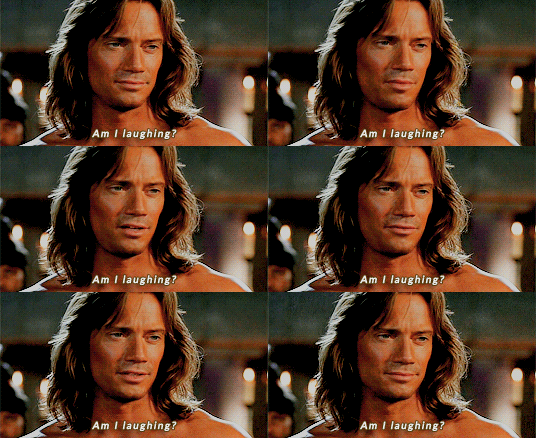

Fortunately for Meredith and us as readers, Rolf has a magic belt that allows him to speak and understand English and also seems to ease his transition into modern life. By the end of his first full day in Maine, Rolf is obsessed with indoor plumbing, some sort of shampoo called drek, (which has a very different connotation here in 2018,) and can even use a computer. The hilarious "adapting to future technology" scenes teased in the synopsis are over before they even begin.

Instead, what The Last Viking truly is is Home Improvement fan-fiction mixed with an MRA wet dream. Rolf is the kind of alphahole asshole I can't stand. His machismo is supposed to highlight the time travel and differences in his world and ours, but (spoiler) because he ends up being completely right and validated, what the book is actually saying is "wasn't it better when we could kidnap women and marry them at knifepoint?"

As covered, Rolf enjoys a lot of the modern world's comforts, but none more so than Mike the TA and his trip to Home Depot.

"[T]hey’d entered Am-eric-hah’s version of Valhalla, a real man’s paradise—the power-tool section of the hardware store."

You know what, it's not even the power tools. They were a big thing in the 90s, a status symbol for a certain kind of men. Rolf's choice of tv: Bob Vila's This Old House and Home Improvement show a segment of the American population was certainly charmed by the idea of working with your hands. I'll even allow that power tools would seem like a magic luxury, unimaginable to a shipbuilder who made his own wooden nails. No, my two biggest problems with this sentence are the hackneyed phonetic spelling and the phrase "real men".

Rolf speaks perfect English by the end of his first scene, thanks to his magic belt, (which features a holy relic in a hidden compartment that Rolf was on his way to return to an English abbey to stop a famine in Norway for reasons.) That is, Rolf speaks perfect English except for the occasional word that is spelled phonetically for...humor? We're first on the receiving end of this writing quirk when Rolf learns Meredith's name. He calls her Merry-Death and will do so for the remainder of the book, even after they're married and he's given up returning to his own time. But even that and Am-eric-hah are ok. They're not funny, but they seem consistent enough with the book's internal logic. The belt seemingly can't translate words that don't have a similar, corresponding meaning in Old Norse. Electrice-city and come-pewter thus do make sense that he'd struggle with them. But he first calls his hero, Tim Allen, Timalley. That doesn't fit, nor does the fact that he evolves to call Tim by his correct name, but never does with Meredith.

But I wouldn't be upset and calling this one of my "biggest problems" in a book I've already admitted is terrible if it wasn't for Meredith's job title.

"Half of your words have no meaning to me. What language is this that you . . . we are speaking?" He rubbed the clasp of his belt while he spoke, as if for luck or answers.

[ . . . ]

"Like profess-whore. I can hardly credit you as a whore.”

Oh boy. There's a lot to unpack here. First, "professor" is not remotely pronounced "profess-whore", so the structure of our joke and our worldbuilding are already unsound. Secondly, while professor does only date back to the 14th century, so does profess. The belt should have no more knowledge of one than the other. Teacher, however, does have roots in Old English, a sister language to Old Norse and one Rolf claims to speak. His belt should easily have substituted tæcan long before making a crude and unfunny joke that Meredith is too plain to be a prostitute.

The book hates Meredith and this loops back around to problem the second, the "real man".

Meredith has problems. She's a doormat for her overbearing scholar parents, her flighty sister, even her dead grandfather, as she's taken a sabbatical from Columbia to teach at his small college in Maine and complete his dream of a longship. She has no friends, she's divorced, and as we find out in a tear-filled, (and rage-inducing,) confession, infertile. So when Rolf shows up and starts barking orders, despite her resistance, her life magically becomes better. Her parents are cowed, her sister gives her custody of her daughter so she's not lonely, she makes friends with her TA and some of the SCA reenactors who show up, and of course, she learns the sexual fulfillment of being with a "real man", which seemingly involves a lot of hair and also semen that can cure infertility. You knew it was going there.

Some of this attitude is the time period in which the book was published. Of the award-winners I listed back at the beginning, I actually didn't like Lord of Scoundrels for a similar reason. I found the hero too domineering. I find female submission to be one of the most popular tropes in mainstream romance, (though research into sexual preferences shows male submission is actually more popular in real life.) because there is something enjoyable in the thought of laying back and letting someone else take all your cares away. I also find these stories come in waves; we just had a big one in 2012 after the success of Fifty Shades. We're not here to shame people who are into femsub fic or alpha tropes. The problem is the female character has to be into it. Meredith is not. From the first page to the last, she fights Rolf to keep her independence. He marries her bound, against her will, because she refuses to commit herself to him when he's going to try to return to the Middle Ages. That goes well beyond the "I know best so let me sort out the building arrangements" thing they have going. Instead, Rolf thinks of Meredith's talking as "lackwit female prattle" and asks, "If she loved him, she would want to please him, wouldn’t she?" That's not love. Meredith, you should run like your tampon string is on fire.

Instead, blinded by lust for Kevin Sorbo, Meredith runs straight to Rolf's bed after the wedding. Because he'll sleep with whores, but he'll only make love to his wife. So after he realizes he's in love with her, he has to force her to marry him so they can finally get it on. Because that makes sense and betrays zero unhealthy ideas about sex work and intercourse. This is what we're here for, right? You want to know if anyone's going to have a dick attack.

Well, no. Dick attack was clearly the author's attempt at writing modern, male internal dialogue. Since here she's writing ancient, male internal dialogue, what we get is some of the purplest prose this side of the gothic.

“Drops of moisture from our first mating linger here,” he pointed out huskily, “like morning mist on seaside grass.”

[. . .]

“You feel like velvet fire licking at my staff,” he gasped as he pulled out, then drove in again, long and slow and sinfully pleasurable. “And you feel like hot marble,”

[. . . ]

“Your woman dew anoints me like molten lava,”

This same scene also features everyone's favorite euphemism, manroot, as well as "womanly nest", which I'm not even sure I know what that is? These all seem very silly now, but again part of this is the time period and the style. God knows I'm not defending these passages, they're awful, but I think even more offensive is when Hill tries to make sex fun.
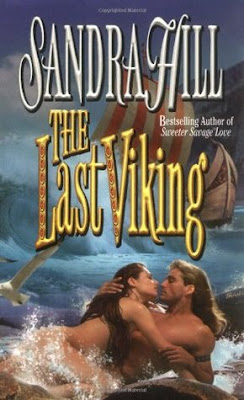

Glad someone's getting wet around here.

Best you fortify your ramparts, my lady of the running tongue. This warrior is about to lay siege to your every portal.

This warrior is about to lay siege to your eVERY PORTAL. I need a lie-down. (Also he only even seizes one portal. Promises promises, Rolf.)

“Especially since I shared with you the secret of the famous Viking S-spot, which even you agreed was far superior to your modern G-spot.”

This is a reoccurring joke. It's never explained. Not where it is, how it provides pleasure, or why a Viking erogenous zone would follow the naming conventions of Gräfenberg. But Rolf tells every man he meets about the S-spot and sends them home to please their female partners. Another example of how a return to the age of raping and pillaging would actually benefit the 90s. Right.

But wait, I hear you all say. This review is wrapping up and we didn't get to the bottom of "Home Improvement fanfiction"? About that. So a third of the way through the book, Meredith's TA, Mike is reintroduced. He's here to serve as an eventual friend to Mer after Rolf leaves, but also to give Rolf the male bonding scenes we were all clamoring for. Mike has one defining personality trait. Despite being a graduate student in medieval studies, chosen for a prestigious assistant position, all we know of Mike is that he's a horndog. A horndog in love with one Pamela Anderson. He makes this known loudly and frequently. The Baywatch (and Home Improvement) actress is mentioned sixteen times in twenty chapters. When Mike and Rolf meet, Mike immediately starts waxing poetic about how hot Pam is. Because the author's definitely met a man before. Definitely. So Rolf, being an alpha and a fixer takes it upon himself to call Pam's agent. How does he get that information? No idea. But here's the worst part: it works. We start getting needy phone messages from NINETEEN NINETY-SEVEN, PLAYBOY COVERGIRL PAMELA ANDERSON.
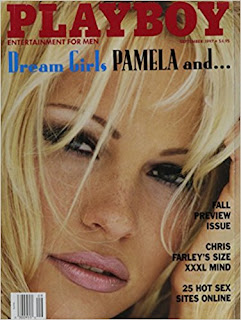
"Will you pursue this Pamela creature till you gain the bedding? I heard that she phoned you repeatedly this past week."
In fact, this works so well that Rolf takes it upon himself to make another series of wildly expensive long distance calls to LA and track down Tim Allen. He loves Tim Allen. He references Tim, actor and character, repeatedly and the author even goes so far as to insert their like-minded philosophies into the background of scenes.

" [. . .] Tim Taylor was explaining to his wife Jill why big breasts were God- given male magnets."

So Rolf wants Tim to come help him build his longboat. Unsurprisingly, considering he got one of the hottest women in the world's phone number, he speaks to a long line of agents and producers who all agree it is a great idea for Tim and the actors to fly to Maine and use the longboat in an episode. This doesn't actually happen and you think the plot line has been dropped until! *deep breath*

Meredith finally accepts both that Rolf is a time traveler and she's in love with him.She has nothing holding her to the twentieth century, so she asks him to take her back to 997 with him.Rolf refuses because he's already had one wife die.Meredith won't marry him if he won't take her, he won't leave without marrying her.The aforementioned kidnap wedding occurs, our heroes finally sleep together, and they spend two blissful weeks waiting for Rolf to finish his boat and the Devil's Moon to rise again.On the day of the moon, there's a tearful sending off.We get a flash-forward to the next day where we're told that Rolf's boat was once again struck by lightning, sunk, and he and his figurehead, Ingrid, are once again sucked into a whirlpool.Except it leaves him in 1997 instead of returning to the past.Rolf's picked up by two fishermen who take him to shore in exchange for knowledge of where the S-spot is.Rolf checks into a hotel and sees a news report of his "death", featuring Meredith crying. He realizes he'd be a real douche to do this to her again and again since he can't stop trying to get back to his time as long as he has this saint's relic.So he flys to Norway to do some research and finds out the famine actually broke the day he went through the whirlpool so his destiny isn't to take the relic back, it's to keep it in the future where it can't affect the weather?So then he travels to England and where the abbey was in his time, but it's just ruins.Then a ghost of the saint burried at the abbey shows up, takes the relic, tells Rolf to follow his destiny and points to a single rose, which somehow signifies Meredith even though by now we know she's pregnant so it should be two roses.Rolf then goes to London or Paris or something to auction off all his Viking jewelry and then finally after six weeks returns to Maine to tell Mer he's not dead.Initially their reunion is a happy one and they bang on her desk,but then he lets it slip that he got his new clothes in London and Meredith is rightly pissed that Rolf faked his death, didn't tell her his research had proved he didn't have to go back to the past, galavanted across Europe without so much as a postcard, and then showed up like nothing happened.They have their big Big Mis, Mer kicks him out of the cabin, and we get a couple chapters of angst until Meredith's niece tells her to turn on Home Improvement.

PHEW!

Upon turning on Home Improvement, what is Meredith, and by proxy the audience, treated to? Rolf of course!  Tim Taylor has decided to soup up his speedboat and hires Rolf to teach him how to construct a longboat, which are famous for their ability to go fast and be manned by one person, obviously. Al and Wilson are also there, trying vainly to make jokes as Rolf flubs his lines, curses, and speaks directly to Meredith through the camera in one of the strangest scenes I have come across. I'm forced to believe Ms. Hill believes television shows are actually plays performed by very small men living in her tv? Even more bizarre is the fact that Rolf is invited back. Anyway, the next day Meredith goes home, secure in her knowledge that Rolf is still in LA where the show is filmed, but surprise! He's in her house and takes her at knifepoint again until she agrees to kiss and make up.

While I try to keep ATTASU a funny but enlightening look at books that go off the beaten path, unfortunately, this time around, I'm just sad. Hill has written eleven books in the series, so obviously they're resonating with someone out there. I've liked a lot of romance novels that I didn't find erotic, but I liked the plot. I've read some that the plot was shit, but something in the love scenes spoke to me. But I'll never understand books that seem to actively hate and harm their female readership. Yes, there's a certain delight in reading a really bad scene, laughing at a truly outlandish description, but it's not worth risking supporting problematic content like this. I can give you a hundred books with a dominating love interest without the near-rape and kidnapping. And that's not a plot point you can blame on the 90s.

Review: Geek Ink by Emanuele Pagani

Monday, March 5, 2018
Title: Geek Ink: The World's Smartest Tattoos for Rebels, Nerds, Scientists, and Intellectuals
Author: Emanuele Pagani
Genre: Art and Photography
Series:
Pages: 224
Published: Expected March 20, 2018
Source: publisher
Rating: 3.5/5
Exhibiting cutting-edge designs from the most sought-after and acclaimed contemporary tattoo artists worldwide, Geek Ink presents magnificent ideas for tattoos on themes from science fiction and fantasy, as well as a wide range of topics across science, mathematics, literature, and philosophy.

With commentary from creators of the Inkstinct project--which connects people with the finest tattoo art from 380,000 studios worldwide and has an Instagram fan base of more than 1 million--as well as interviews with world-renowned masters like Eva Krbdk (460K followers), David Cote (232K followers), and Thomas Eckeard (169K followers), this is the definitive tattoo inspiration sourcebook for hipsters, bookworms, scientists, academics, engineers, and, of course, geeks!
I've never reviewed an art book on APR before, but when I was offered an ARC of Geek Ink, I was over the moon. Geek tattoos are something very close to me and mine. The artist of my Bradbury piece also did a full geek sleeve for my sister, featuring Warhammer 40k, Psychonauts, Phantom of the Opera, Legend of Zelda, and Supernatual. (She also has separate Repo the Genetic Opera and a Fatal Frame pieces.) The seventh wedding anniversary gift is traditionally copper, so I sent my husband to a very nice sadist to stab a Terry Pratchett inspired "copper" badge into his arm.

The book is set up in two sections. The first is a brief profile of 25 artists from around the globe. These feature a one paragraph bio, links to their instagram and inkstinct pages, a quote from them about their art, and 8-10 samples from their portfolios. The layout and photography are high quality and do a wonderful job framing the tattoos as art.  The only problem with the samples chosen is many of the pieces are featured in the book twice, both here and either in one of collages at the beginning and end of each section or in the gallery itself.

Standouts for me were Frank Carrilho's Nikola Telsa, David Cote's Neon Vader, (the color work to make something actually appear made of neon tubing, I'm in awe,) literally every single piece by Inez Janiak, Andrea Morales' Killer Robot and The Golden Snitch and Hogwarts, PisSaro's Bejeweled Elephant, and Hugo Tatooer's entire aesthetic.


I have good taste. Morales and Carrilho appear on the cover and Cote appeared on the previous version.

The gallery was less successful. Its table of contents consists of animals, anime, astronomy, biology, botany, conceptual, cult classics, fantasy, geography, geometry, literature, psychology, science fiction, surrealism, technology, and television. Large sections like animals and botany are further divided, though not in the table of contents so you have to flip to the first page and then scan through. Animals are split into vertebrates and invertebrates, and then vertebrates are split into classes: aves, cetacea, proboscidae, reptilia, mammalia, then order: carnivora, and finally family: canidae, felidae. All this seems like an artificial way to make animal tattoos, the most popular tattoo type, seem geeky. All sciences, zoology included, are pretty geeky, but a lot of the included tattoos look like someone's pet.

The classifications are arbitrary and made it harder to look up the subjects. For example, Rob Carvalho's Fox and Rose (inspired by The Little Prince) is on page 170, Cult Classics. Meanwhile, Nora Lyasko's The Little Prince piece, The Fox and the Prince is on page 190, Literature. (Page numbers from the PDF ARC and may be changed in the final printing, of course.) A replica of Starry Night is in Surrealism, of all places. Wolverine's in Cult Classics, but Darth Vader's in Sci-Fi.

It also feels like a lot of geek culture is missing. There are only six TV tattoos, none of which are the big hitters I'd expect. No Doctor Who or Star Trek. There is an X Files, but again it's back in Cult Classics.  There are no games, video, board, or tabletop represented. Not even anything that really says hard sciences, except one representation of a caffeine molecule, (in biology, next to a skull and two stylized hearts.) There are a few under the featured artists, but if you're using the gallery to browse for ideas, you're going to have a hard time.


It's a beautiful coffee table book, but I don't know if you'll find your new ink in it.

Book Tour Review: Blood of a Thousand Stars by Rhoda Belleza

Monday, January 29, 2018
Title: Blood of a Thousand Stars
Author: Rhoda Belleza
Genre: science fiction
Series: Empress of a Thousand Skies #2
Pages: 344
Published: expected February 20 2018
Source: ARC from publishers for review
Rating: 4/5


Empress 
With a revolution brewing, Rhee is faced with a choice: make a deal with her enemy, Nero, or denounce him and risk losing her crown.


Fugitive 
Framed assassin Alyosha has one goal in mind: kill Nero. But to get his revenge, Aly may have to travel back to the very place he thought he’d left forever—home.

Princess 
Kara knows that a single piece of technology located on the uninhabitable planet Wraeta may be the key to remembering—and erasing—the princess she once was.

Madman 
Villainous media star Nero is out for blood, and he’ll go to any means necessary to control the galaxy.

Vicious politics and high-stakes action culminate in an epic showdown that will determine the fate of the universe.


The second book in Rhoda Belleza's politics and revenge-driven YA science fiction series, Blood of a Thousand Stars offers more of what made the first so much fun: fast-paced action, interesting characters of diverse backgrounds, clever plots, and general mayhem in space.  This time around the stakes are higher and the plots are thicker, the villain more devious -- the author pulls no punches with her sophomore offering. Galactic war threatens everyone and everything, and the Ta'an sisters and their allies have to scramble to find their place in everything and try to stop a tyrant.

Empress of a Thousand Skies was undoubtedly Rhiannon's story, and Blood of a Thousand Stars belongs to Kara/Josselyn's struggle and evolution. While there are still three pivotal rotating POVs --  this time: Kara, Rhee, and Alyosha -- it is Kara that dominates the narrative. Hers is the POV that stood out the most because her choices are the most crucial to the plot of the novel. The other characters have become steadily more real and defined people over the course of both books, and they again play essential roles, but Kara remains the linchpin of the narrative. Rhiannon is a strong supporting main character; she still grows and learns about herself; Alyosha finds himself once again in unexpected but dire straits and complements Kara in more ways than one.

Belleza features a lot of action and assassination attempts and political maneuvering in her second novel. There are some high stakes and high adventures as each character fights -- for the throne, for their people, for themselves. At times the pacing of essential scenes can feel almost frenetic; with a lot happening and different narrators covering various events, it can be confusing to keep straight. There can be clarity issues when it comes to the fight scenes, especially, but it's an improvement from the same situation in book one. There also is a third-act plot reveal which feels like a bit of a retcon from key events that took place  in Empress of a Thousand Skies -- <spoiler>now Veyron is revealed as loyal and his ill-fated assassination attemped was timed perfectly so Dahlen would save Rhee? But then who would have saved Julian from Nero because Rhee was alive?....</spoiler>  -- but tied in neatly with how Julian was involved in this book's plot. I'm not sure it entirely works but I did appreciate how Julian complicated Rhiannon's narrative and made her reflect on her past choices and actions.

While there is still room and space in this galaxy to explore further stories, there is a definite feel of finality to at least this particular arc of Kara and Rhee's stories. There's bittersweet resolution that fits the harsh events that preceded it. Blood of a Thousand Stars was quickly-moving and and engaging; it may be on the lighter side of scifi but doesn't lack for imagination or for a death toll. The plotting could use a little more finesse, the universe feels a tad bit small (why are all these journeys over so fast? Space is huge!) but overall, a surprising and entertaining sequel and an improvement on its predecessor.


Related Posts Plugin for WordPress, Blogger...

Copyright © 2015 Ageless Pages Reviews. All Rights Reserved.

Amelia Theme by The Lovely Design CO and These Paper Hearts.